10 Benefits of GI Tag for Producers, Artisans and Consumers in India
A Geographical Indication tag provides collective legal protection, guarantees product authenticity, and enables premium pricing for rural artisans. The registration benefits three main groups: the producers who make the goods, the consumers who buy them, and the broader Indian economy. On Today post we gonna tell benefits of GI Tag for Producers, Artisans and Consumers & Importers.
What is a GI Tag and Why Does It Matter?
A Geographical Indication tag is a form of intellectual property that identifies a product originating from a specific territory with unique qualities. It prevents unauthorized sellers from using the regional name, protecting the cultural heritage and market value of genuine products.
The Indian government established this legal framework through the GI Act 1999. This legislation brings India into compliance with the TRIPS Agreement under the World Trade Organization. A Geographical Indication serves as a definitive proof that a product holds specific characteristics, reputation, or taste profiles directly linked to its geographic environment or traditional production methods.
Which products can get a GI tag in India?
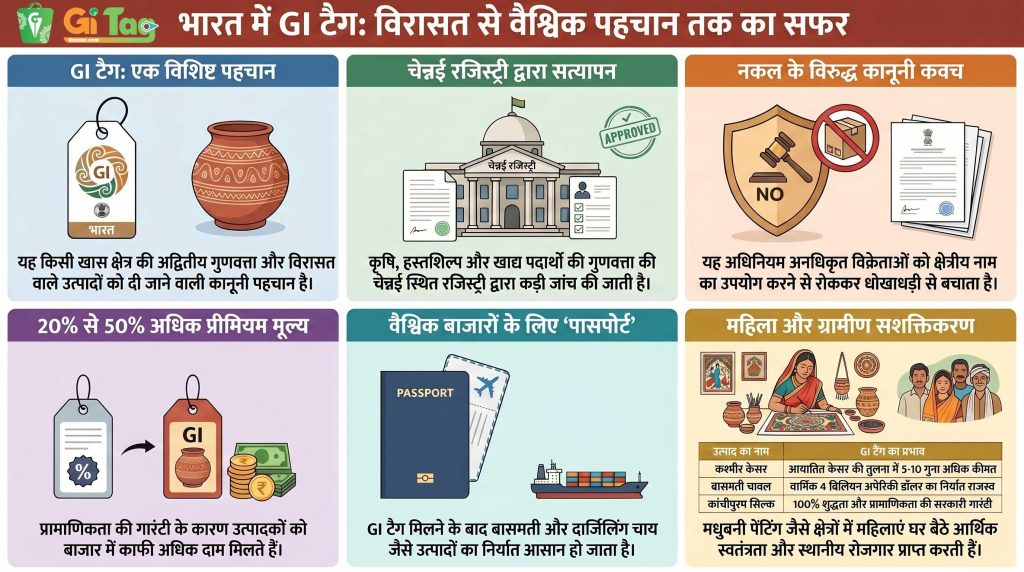
Products receive a GI tag if they fall into specific recognized categories and pass rigorous quality verifications. The Geographical Indications Registry in Chennai grants these tags to GI tagged agriculture products in India, natural goods, manufactured goods, foodstuff, and GI tagged handicraft products in India. You can view the complete list of GI tagged products in India to understand the vast scope of this intellectual property.
How Does a GI Tag Benefit Producers and Artisans?
A GI tag transforms local rural artisans into protected business owners by offering legal exclusivity and higher profit margins. Producers gain direct access to national and international buyers without relying on middlemen to verify their product quality.
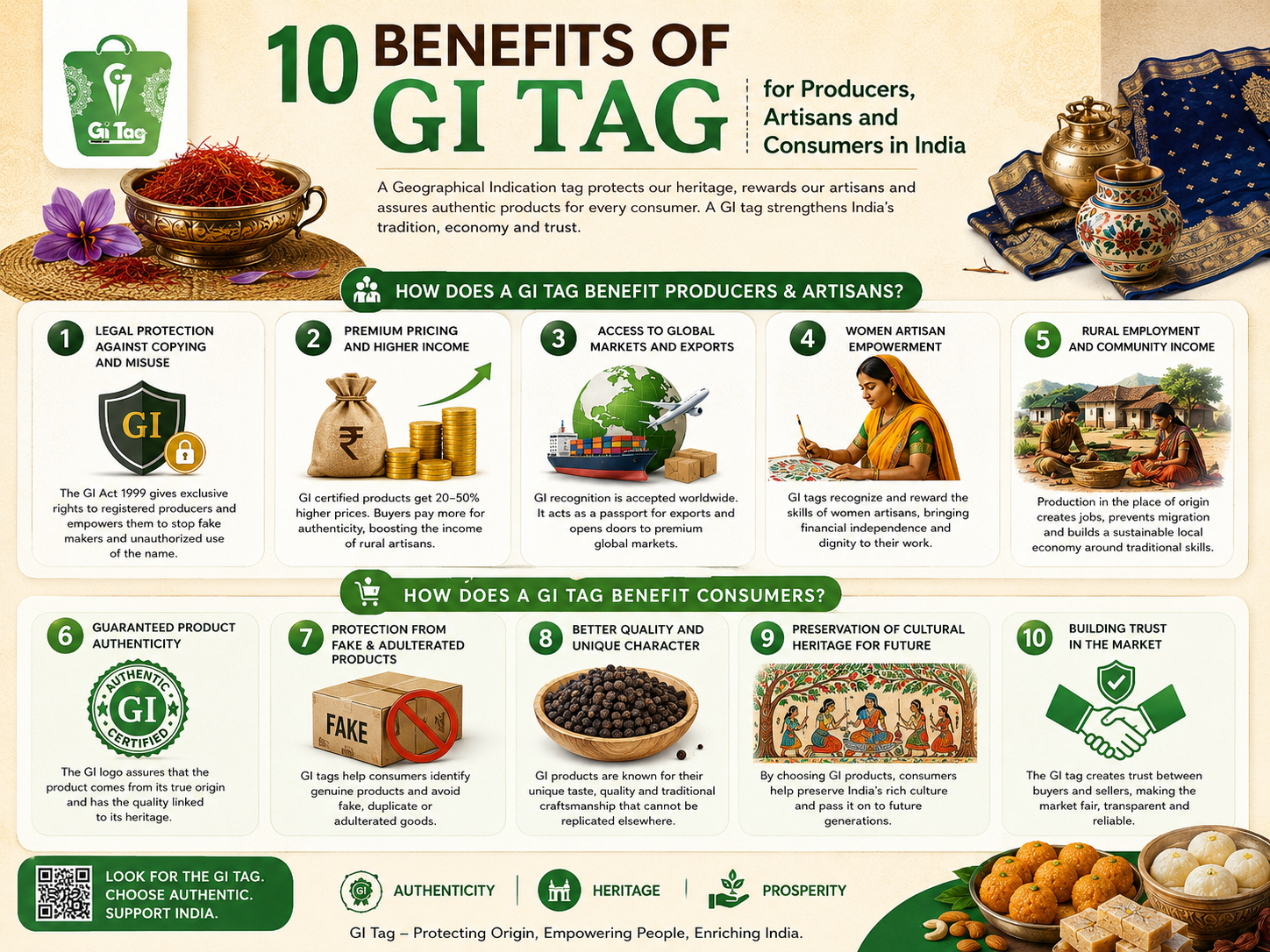
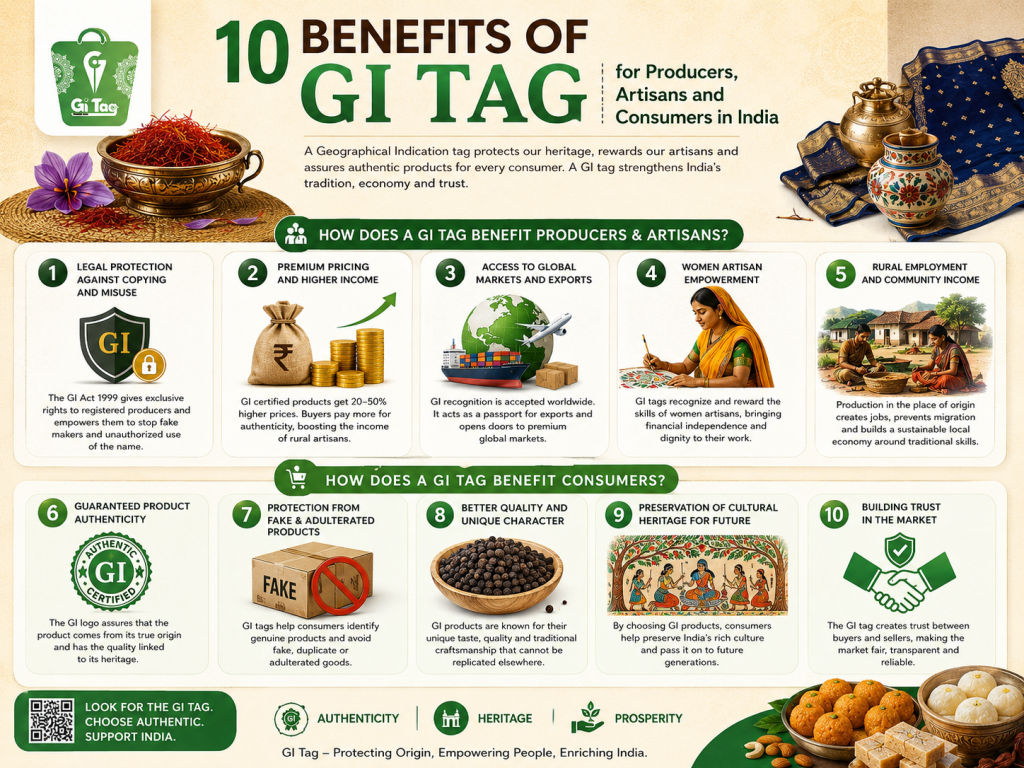
Benefit 1 – Legal protection against copying and misuse
The GI Act 1999 gives registered producer groups the exclusive right to use the geographical name on their goods. It acts as a strict anti-counterfeiting shield. Registered associations hold the legal authority to file infringement suits against fake manufacturers and unauthorized sellers. This collective ownership stops large corporations from mass-producing cheap imitations and exploiting the regional identity. The legal framework ensures that only genuine producers reap the rewards of their historical reputation.
Benefit 2 – Premium pricing and higher income
GI certified products command a 20 to 50 percent higher price in the commercial market. Buyers gladly pay this premium pricing for the absolute guarantee of authenticity. Kashmir Kesar commands a price 5 to 10 times higher than imported Iranian saffron in the domestic market solely because of its GI recognition. This direct income boost elevates the standard of living for the entire rural artisan community. Artisans bypass exploitative middlemen and retain a larger share of the final retail price.
Benefit 3 – Access to global markets and exports
The TRIPS Agreement recognizes GI tags across international borders. Global buyers and import agencies require strict origin certification before purchasing heritage goods. A GI certificate acts as a verified passport for international export. Products like Darjeeling Tea and Basmati Rice rely on this global legal recognition to dominate European and American markets. The certification streamlines customs clearances and opens doors to premium international retail chains.
Benefit 4 – Women artisan empowerment
GI registration directly empowers female workers in the handicraft and GI tagged textile products in India. Products like Madhubani Paintings and Sujini Embroidery rely heavily on the generational skills of women artisans. The premium pricing allows these women to work from home, achieve total financial independence, and support their families. It monetizes their traditional knowledge and brings them into the formal digital economy without requiring them to leave their villages.
Benefit 5 – Rural employment and community income
GI tags mandate that products undergo their production or processing within their specific place of origin. This strict geographical requirement creates localized rural employment and stops forced labor migration to crowded cities. The increased consumer demand for authentic goods keeps rural workshops busy throughout the year. It builds a sustainable local economy around traditional craft skills. Furthermore, modern digital platforms like ONDC and Indiahandmade integrate these artisans directly into the national e-commerce grid.
How Does a GI Tag Benefit Consumers?
Consumers benefit from GI tags because the certification guarantees product authenticity and protects buyers from fraudulent imitations. A GI logo assures the buyer that the product possesses the exact quality, taste, or craftsmanship associated with its origin.
Benefit 6 – Guaranteed product authenticity
The GI tag functions as an absolute authenticity guarantee for retail buyers. When a consumer buys a Kanchipuram Silk Saree with an official GI mark, they know it comes directly from the traditional weavers of Tamil Nadu. The tag eliminates the guesswork from buying premium heritage items online. It provides a visual, government-backed seal of trust that no individual brand can replicate.
Benefit 7 – Protection from fake and adulterated products
Counterfeit products flood the open market and deceive consumers into paying high prices for low quality goods. The GI tag solves this widespread consumer problem. A buyer looking for pure Malabar Pepper or authentic Ratlami Sev uses the GI logo to avoid dangerous adulterated fakes. It provides a reliable verification standard for everyday consumers. Law enforcement agencies use the registry data to seize fake goods and protect public health.
Benefit 8 – Informed buying with origin traceability
Modern consumers demand total transparency about where their products come from. GI registration ensures complete origin traceability from the farm or workshop to the final retail shelf. Buyers know exactly which region, soil type, or artisan community produced the item. This deep transparency allows buyers to make informed ethical choices. They direct their purchasing power to support specific regional economies and sustainable agricultural practices.
How Does a GI Tag Benefit the Indian Economy?
The GI ecosystem boosts the Indian economy by increasing export revenues, supporting micro enterprises, and driving regional tourism. It transforms unrecognized rural skills into formal economic output that contributes significantly to the national GDP.
Benefit 9 – Boost to Indian exports and trade reputation
GI products drive massive export value for the Indian economy every year. Basmati Rice alone generates over USD 4 billion annually in export revenue for the country. The strict quality controls required for GI registration improve India’s reputation in international trade agreements. It positions Indian goods as premium, origin-specific commodities rather than cheap bulk raw materials. This shift increases foreign exchange reserves and strengthens the national currency.
Benefit 10 – Preservation of cultural heritage and GI tourism
GI tags preserve dying cultural heritage by making traditional manufacturing methods economically viable again. This preservation creates lucrative secondary revenue streams through GI tourism. Visitors travel to Bidar to see Bidriware artisans at work or visit Assam to tour GI registered tea gardens. This origin-based tourism injects fresh capital into local hotels, restaurants, and transport services. It creates a multiplier effect that uplifts the entire regional economy.
When Does a GI Tag Not Solve Your Problem?
A GI tag fails to help individual businesses seeking exclusive brand control or fast legal protection. It is a collective right that requires community cooperation, strict quality standards, and a long waiting period for approval.
The GI tag does not solve every commercial challenge. It provides zero value in the following specific situations:
- Individual ownership: You cannot own a GI tag as a single person or a private company. It requires collective ownership by an association or producer group.
- Generic products: You cannot register a product that lacks a proven historical link to its geography. A standard t-shirt factory cannot claim a GI tag just because it operates in a specific city.
- Fast protection: The registration process takes 1 to 2 years minimum. You can read exactly how GI tag registration works in India to understand the lengthy timeline. Manapparai Murukku applied in 2014 and received its tag in 2023. Trademarks offer much faster protection for individual brands.
- Automatic sales: A GI tag does not automatically sell your product. You still need active marketing, modern packaging, and distribution networks like ONDC to reach paying buyers.
Frequently Asked Questions About GI Tag Benefits
What are the main advantages of a GI tag?
The main advantages include premium pricing for producers, legal protection against counterfeiters, and guaranteed authenticity for consumers. It elevates local products to global standards, boosts export value, and preserves traditional regional knowledge.
How long is a GI tag valid in India?
Yes, a GI tag is valid for 10 years from the date of registration. The authorized users must renew it every 10 years. It remains valid indefinitely as long as the renewal fees are paid on time.
Can any seller sell GI tagged products?
No. Only registered authorized users can legally sell products using the GI tag name and logo. A producer living in the region must apply to the Geographical Indications Registry to become an authorized user before selling.
Who gives GI tags in India?
The Geographical Indications Registry in Chennai gives GI tags in India. This office operates under the Controller General of Patents, Designs and Trademarks. They evaluate applications, publish the GI Journal, and issue the final certificates.