
All GI Tagged Handicraft Products in India – Artisan Traditions and Craft Origins
GI tagged handicraft products in India represent the ultimate expression of regional artistry and cultural heritage. Geographical Indication certification protects these handmade goods from cheap factory imitations, ensuring that buyers receive authentic Indian handicrafts. Rural artisans preserve their ancestral artisan traditions, using local materials and historical techniques. Every certified craft tells a story of its craft origins, reflecting regional culture.
Artisan traditions keep traditional knowledge alive across different Indian states. Consumers purchase these unique creations to support local weaver communities directly. The government certification guarantees quality assurance and secures fair wages for registered creators. This directory lists the major registered handicrafts of India, explaining their cultural significance.
Table of Contents
- What are GI Tagged Handicraft Products?
- Why Should You Buy GI Tagged Indian Handicrafts?
- Top GI Tagged Handicraft Products from India
- Frequently Asked Questions About Indian Handicrafts
What are GI Tagged Handicraft Products?
GI tagged handicraft products in India are traditional handmade items certified by the government for their regional origin. This certification confirms that the goods possess unique qualities, historical value, and specific characteristics linked to their geographical birthplace.
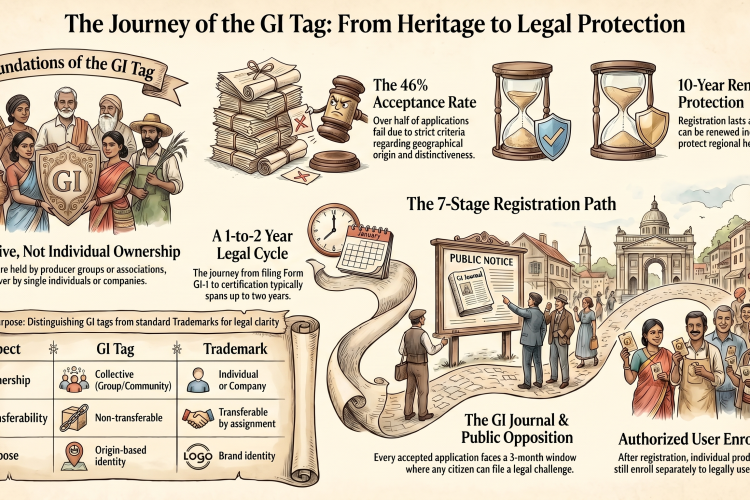
GI tagged handicraft products represent regional items that obtain official government certification under the GI Act 1999. The Geographical Indications of Goods (Registration and Protection) Act, 1999 protects the legal rights of traditional creators. The Chennai registry manages the official registration system for these regional goods. Traditional skills and natural local materials combine to give these products their identity.
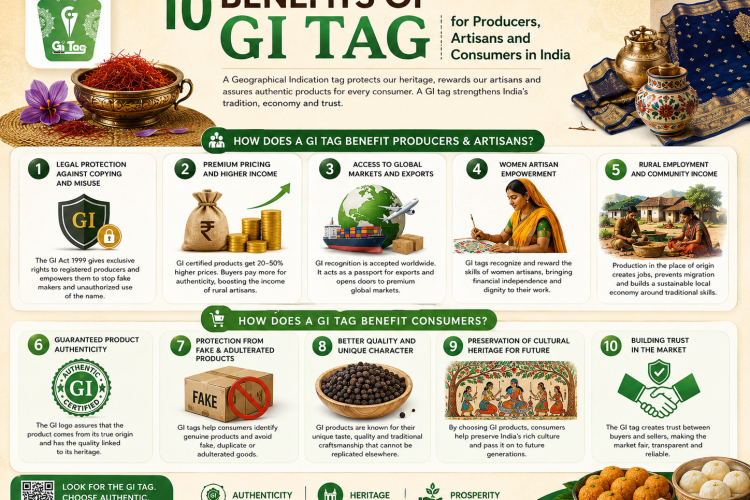
Government certification ensures that only registered producers in the native region can use the protected name. Mass-produced items made in other regions cannot carry the official certification mark. This legal protection safeguards heritage crafts from exploitation by large factories. Every registered product gets a unique registration number, allowing consumers to verify authenticity.

Authentic Indian handicrafts carry a reputation linked directly to their geographic birthplace. The registry office maintains an official directory of all authorized users of each registered tag. Authorized users must register individually to sell their crafts under the protected name. This quality assurance helps buyers identify genuine handmade goods.
Why Should You Buy GI Tagged Indian Handicrafts?
You buy GI tagged Indian handicrafts to secure authentic handmade goods and support rural artisans directly. This certified purchase prevents cheap machine-made counterfeits, preserves ancestral heritage crafts, and guarantees that your money reaches genuine local weaver communities.
Rural artisans receive direct economic benefits when consumers purchase certified goods. The legal tag ensures that traditional creators receive fair value for their manual labor. Cheap machine-made copies often flood the market, stealing revenue from genuine creators. A certified purchase directs money to home workshops, supporting local livelihoods in rural villages.
Traditional knowledge remains alive when consumers choose authentic regional products. Local weaver communities preserve unique handloom techniques and ancient craftsmanship methods through market demand. Each purchase helps pass down these precious heritage crafts to future generations. Buyers preserve cultural heritage by choosing certified handmade goods.
Quality assurance protects consumers from inferior materials and fake products. Registered producers follow strict quality standards approved by the national registry office. Natural dyes and premium raw materials define these authentic creations, ensuring durability. Buyers receive a genuine piece of Indian history, backed by official government certification.
Top GI Tagged Handicraft Products from India
Famous GI tagged handicraft products in India include Kashmir Pashmina, Channapatna Toys, and Bidriware. These certified heritage products represent the rich artistic traditions of different Indian states and showcase the unique skills of registered rural artisans.
Authentic Indian handicrafts represent diverse regional specialties. The registry office protects several traditional crafts under the handicraft and handloom categories. Buyers can view the twelve registered handicraft products in the table below. This table details origin states, materials, and connects you to verified product pages.
| Product Name | Origin State | Key Materials / Features | Artisan Tradition |
|---|---|---|---|
| Kashmiri Hand Knotted Carpet | Jammu and Kashmir | Pure silk or wool, intricate oriental designs | Hand-knotted weaving on vertical looms |
| Banaras Sarees and Brocades | Uttar Pradesh | Fine silk threads, gold and silver zari threads | Handloom weaving in Varanasi |
| Kashmir Pashmina | Jammu and Kashmir | Changthangi goat wool, fine hand-spinning | Traditional handloom weaving and embroidery |
| Aranmula Kannadi | Kerala | Secret metal alloy, front-surface reflection | Traditional metal mirror casting in Aranmula |
| Bidriware | Karnataka | Blackened zinc and copper alloy, pure silver inlay | Hand-carved metal inlay craft in Bidar |
| Channapatna Toys | Karnataka | Ivory wood, natural vegetable dyes, lacquer colors | Hand-lathe woodwork and toy-making |
| Blue Pottery of Jaipur | Rajasthan | Quartz stone powder, cobalt blue glaze, floral motifs | Hand-molded pottery without natural clay |
| Thanjavur Art Plate | Tamil Nadu | Copper, brass, and silver sheets on wood | Metal relief work depicting mythological themes |
| Madhubani Paintings | Bihar | Natural pigments, handmade paper, twig brushes | Folk painting depicting nature and mythology |
| Pattachitra | Odisha and West Bengal | Cotton cloth canvas, natural stone colors, lacquer | Scroll painting depicting traditional folklore |
| Dhokra Metal Craft | Chhattisgarh, Odisha, Bengal | Brass and bronze, beeswax thread, clay molds | Lost-wax casting metal craft |
| Kondapalli Toys | Andhra Pradesh | Tella Poniki softwood, natural oil paints | Hand-carved softwood toys and figurines |
Kashmir Pashmina
Kashmir Pashmina is a premium and luxurious GI tagged shawl handcrafted in Jammu and Kashmir. Trained artisans weave this heritage craft using fine wool from the Changthangi goat, ensuring exceptional warmth and softness for buyers worldwide.
Kashmir Pashmina shawls represent the pinnacle of weaving expertise in northern India. Handloom weavers hand-spin the delicate wool of the Changthangi goat to create these lightweight wraps. The diameter of this natural wool is under fifteen microns, making the fabric soft. Local artisans spend several months embroidering a single shawl with floral patterns.
Traditional knowledge plays a central role in preserving the quality of this heritage craft. The registry office enforces strict quality assurance guidelines to protect the Pashmina name. The official GI tag guarantees that the shawl is hand-woven using authentic Changthangi wool. Buyers purchase these premium textiles to support rural weavers.
Bidriware from Karnataka
Bidriware is a highly unique GI tagged metal craft from Bidar, Karnataka. Dedicated artisans create this historic craft using a blackened alloy of zinc and copper, which they inlay with intricate designs made of pure silver wire.
Bidriware metal craft originated in Bidar, Karnataka, during the rule of the Bahmani Sultanate in the fourteenth century. Local artisans use a unique soil from Bidar Fort to blacken the alloy surface. The chemical properties of this soil oxidise the zinc and copper base, creating a dark background. Pure silver inlay shines brightly.
Rural artisans hand-carve fine patterns onto the metal body before inserting the silver wires. The finished product receives a protective coating to preserve its brilliant contrast. Buyers purchase these metal boxes, vases, and trays to add a touch of elegance to their homes. Government certification guarantees that every piece is an authentic creation.
Blue Pottery of Jaipur
Blue Pottery of Jaipur is an iconic GI tagged craft from Rajasthan. Artisans make this pottery using a unique paste of quartz stone powder instead of clay, decorating it with vibrant blue cobalt dyes and floral patterns.
Blue Pottery of Jaipur differs from conventional pottery because it uses zero clay. Artisans mix quartz stone powder, glass dust, borax, and water to create a unique pottery paste. The fragile pieces are hand-molded and baked at low temperatures to prevent cracking. Local artists paint the outer surface with cobalt blue natural dyes.
Jaipur artists paint intricate Persian motifs and floral designs on the smooth glaze. The finished pottery carries a signature semi-translucent appearance that reflects light beautifully. Consumers buy these decorative plates and bowls to own a piece of Rajasthan’s royal heritage. The GI tag protects this pottery from mass-produced ceramic counterfeits.
Madhubani Paintings
Madhubani Paintings are famous GI tagged traditional art forms originating from Bihar. Folk artists create these colorful paintings using natural pigments, twigs, and matchsticks, depicting traditional mythological stories and local nature through intricate line drawings.
Madhubani Paintings originated in the Mithila region of Bihar, where women decorated walls during festivals. Folk artists paint these detailed designs on handmade paper or cotton canvas. The paint colors come from natural sources like turmeric, indigo, and flowers. Artists use twigs and matchsticks to draw precise geometric outlines.
Bihar artists paint stories of local folklore, Hindu deities, and natural symbols like fish. The designs have no empty spaces because artists fill every gap with tiny details. Buyers purchase these vibrant paintings to decorate their homes with authentic folk art. Government certification protects Mithila artists from industrial prints.
Channapatna Toys
Channapatna Toys are safe GI tagged wooden toys crafted in the state of Karnataka. Trained artisans carve these colorful toys using ivory wood and color them with non-toxic natural vegetable dyes, making them safe for small children.
Channapatna Toys are crafted in the town of Channapatna, Karnataka, earning the town the nickname of Toy Town. Local craftsmen turn ivory wood on lathes to shape the toys. The wood is lightweight and has a fine grain structure, which is ideal for carving. Artisans use shellac to polish the surface.
Non-toxic vegetable dyes provide the bright colors, ensuring safety for infants who play with toys. Traditional toy-making skills pass through families of craftsmen, preserving local livelihood. The official GI tag protects these eco-friendly wooden toys from cheap plastic imports. Consumers buy these educational wooden dolls to provide safe play options.
Frequently Asked Questions About Indian Handicrafts
Frequently asked questions about Indian handicrafts address registration processes, authentic purchase locations, and specific heritage product classifications. These direct answers help buyers verify government certifications and purchase genuine handmade goods from registered rural Indian artisans.
Frequently asked questions provide quick clarity for buyers looking to verify Geographical Indication markings on various crafts. Traditional creations have distinct verification processes regulated by national laws. Understanding these rules ensures that your money supports registered rural artisans and authentic heritage crafts.
How does a GI tag help Indian artisans?
A Geographical Indication tag protects local artisans by preventing counterfeit products in the market. This government certification secures fair wages, preserves ancestral traditional knowledge, and empowers rural communities by boosting direct sales of authentic handmade goods.
Authorized users register under the official Geographical Indications Registry to secure complete legal protection. The registry office gives each verified creator a unique user registration number. Fake sellers face strict legal penalties if they sell ordinary goods using a registered name. This protection preserves traditional handloom skills.
Where can I buy authentic GI tagged handicrafts?
You can buy authentic GI tagged handicrafts online from the official marketplace at GI Tag Bazaar. This specialized platform connects buyers directly to verified rural artisans, ensuring quality assurance and preventing counterfeit purchases in the marketplace.
GI Tag Bazaar guarantees quality assurance by verifying every registered seller before listing products. The platform lists authentic creations like Kashmir Pashmina, Bidriware, and Jaipur Blue Pottery directly from authorized creators. Every shipment features the official government GI logo and credentials. Buyers receive a direct certificate of regional origin.
Are Banaras Sarees considered a handicraft product?
Yes, Banaras Sarees are considered a handicraft product because weavers hand-weave these textiles using traditional handloom techniques. The official Geographical Indications Registry protects these premium brocades under the handloom category to preserve their heritage craftsmanship.
Handloom weavers in Varanasi, Uttar Pradesh, create these historic silk sarees using pure gold and silver zari thread. The weaving process takes weeks of manual work on complex wooden looms. The official Geographical Indication tag protects these luxury sarees from powerloom imitations. Buyers receive a certified masterpiece of traditional design.