
GI Tagged Products of Karnataka – Silk, Crafts and Spices
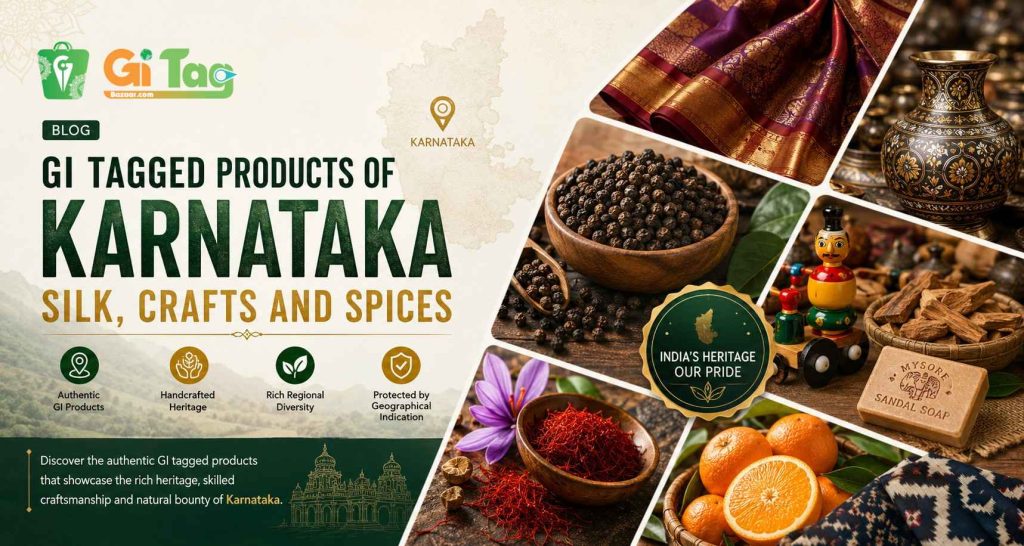
The GI tagged products of Karnataka cover legendary heritage items like Mysore Silk, Bidriware, Channapatna Toys, and Coorg Orange that possess distinct regional characteristics. This comprehensive directory connects the unique geographical districts to the local artisan communities that create these certified regional goods.
Table of Contents
- How Many GI Tagged Products Does Karnataka Have?
- What are the GI Tagged Agricultural Products and Coffees from Karnataka?
- What are the GI Tagged Textiles and Handloom Products from Karnataka?
- What are the GI Tagged Handicrafts and Traditional Arts from Karnataka?
- What are the GI Tagged Manufactured Goods from Karnataka?
- How can Buyers Authenticate and Purchase GI Tagged Products from Karnataka?
- Frequently Asked Questions About GI Tagged Products of Karnataka
How Many GI Tagged Products Does Karnataka Have?
Karnataka holds more than 45 registered GI tagged products across agriculture, textiles, traditional handicrafts, and manufactured goods categories. The state leads the entire country in registered handicraft items and holds exclusive intellectual property rights over multiple iconic manufactured goods.
The GI Registry protects these famous local products from cheap mass-market imitations. You can read our master guide on what is a GI tag and its legal protection to understand how this system supports local Indian artisans.
The cultural heritage of Karnataka spans ancient royal capitals and dense high-altitude forests. These diverse environments allow local communities to create highly specific geographical goods. You can check the master list of all GI tagged products in India to compare Karnataka with other states.
What are the GI Tagged Agricultural Products and Coffees from Karnataka?
The GI tagged agricultural products from Karnataka include Coorg Orange, Nanjangud Banana, Byadgi Chilli, and a unique four-product regional coffee cluster. The specific geographical boundaries and fertile soil conditions of the Western Ghats produce these premium quality spices and fruits.
Karnataka produces India’s finest agricultural goods. You can view the complete list of GI tagged agricultural products in India to discover other famous Indian crops.
Coorg Orange Coorg Orange originates from the Kodagu district. The government granted its GI registration in 2006. The farmers grow this unique sweet-sour mandarin at high altitudes within the Western Ghats. The fruit features a very tight skin and a strong pleasant aroma.
Nanjangud Banana Nanjangud Banana comes from Nanjangud town in the Mysore district. This specific temple town banana acquires its distinct flavor directly from the unique soil composition along the banks of the local Kapila river.
Udupi Mattu Gulla Brinjal Udupi Mattu Gulla Brinjal originates from the Udupi district. This green round brinjal grows exclusively near the saline coastal water belt. The specific coastal soil gives the vegetable its distinct taste.
Which coffees from Karnataka have GI tags?
Chikmagalur Arabica, Coorg Arabica, Bababudangiris Arabica, and Monsooned Malabar Coffee have GI tags from Karnataka. The farmers grow these premium coffees under natural jungle shade at high altitudes. The unique monsoon-exposed processing creates the low acidity found in the Monsooned Malabar variety.
What makes Byadgi Chilli different from other Indian chillies?
The deep red color, exceptionally high color value, and extremely low pungency make Byadgi Chilli from the Haveri district different from other Indian chillies. The spice industry prefers this specific registered crop globally for paprika extraction rather than for fiery heat.
What are the GI Tagged Textiles and Handloom Products from Karnataka?
The GI tagged textiles and handloom products from Karnataka feature the luxurious Mysore Silk, the traditional Ilkal Saree, and the temple-bordered Molakalmuru Sarees. The local weaver communities maintain strict production standards to protect these ancient royal fabric traditions.
The state protects its diverse weaving heritage actively. You can browse all GI tagged textile products in India to explore regional weaves across the country.
Mysore Silk Mysore Silk originates from Mysore. The Karnataka Silk Industries Corporation (KSIC) acts as the sole certification authority. The unique characteristic of this fabric is the extremely lightweight pure mulberry silk body. Authentic sarees always carry the official KSIC hallmark stamp.
Molakalmuru Sarees Molakalmuru Sarees come from the Chitradurga district. The local weavers create these fine silk garments using traditional temple borders. The intricate woven motifs draw direct inspiration from ancient Chalukya stone carvings.
How is the Ilkal Saree made and where does it come from?
The Ilkal Saree comes from the Bagalkot district in Karnataka. The local weavers use a unique technique called Tope teni to physically interlock the pure silk pallu with the cotton-silk blend body. You can view authentic Ilkal Saree details on our product page.
What are the GI Tagged Handicrafts and Traditional Arts from Karnataka?
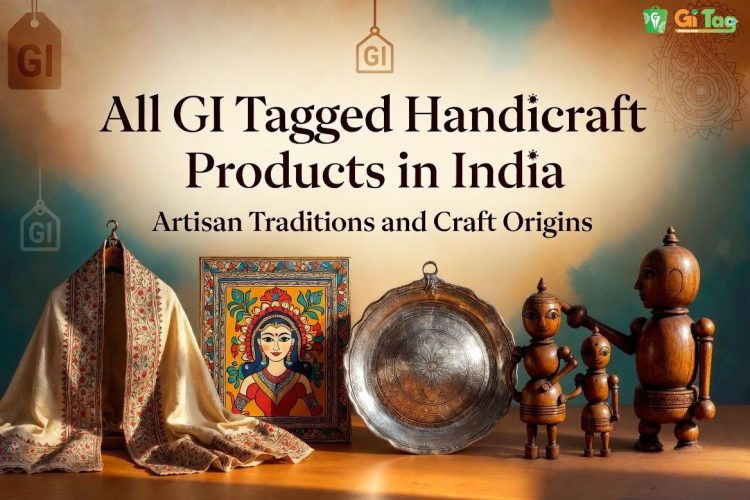
The GI tagged handicrafts from Karnataka include Bidriware metal craft, Channapatna Toys, Kasuti Embroidery, and Lambani tribal embroidery. The specialized artisan communities utilize specific local materials and regional artistic motifs to create these protected cultural items.
Handicrafts represent the living history of the state. You can find the complete list of GI tagged handicraft products in India in our central directory.
Kasuti Embroidery Kasuti Embroidery originates from the Dharwad and Bagalkot districts of North Karnataka. The local artisans execute this traditional Kannada needlework using four specific stitch types: gavanti, murgi, negi, and menthi.
Lambani Embroidery Lambani Embroidery comes from Sanduru in the Bellary district. The Banjara tribal women of the Lambani community craft these vivid textiles. They use bright thread embroidery and intricate mirror work on hand-stitched garments.
Who makes Bidriware and what technique do they use?
The traditional Muslim artisan community of Bidar makes Bidriware. The craftsmen use a complex silver inlay technique on a blackened zinc-copper alloy base. They polish the final intricate product using specific soil found only in the historic Bidar fort. View our Bidriware collection.
What are Channapatna Toys and why are they GI tagged?
Channapatna Toys are traditional wooden playthings from the Ramanagara district. The Lakkhagaararu toy makers use a lathe-turning process on soft ivory wood. They finish the vibrant pieces using completely natural lacquer dyes, earning the GI tag for this unique safe manufacturing process. See the Channapatna Toys page.
What are the GI Tagged Manufactured Goods from Karnataka?
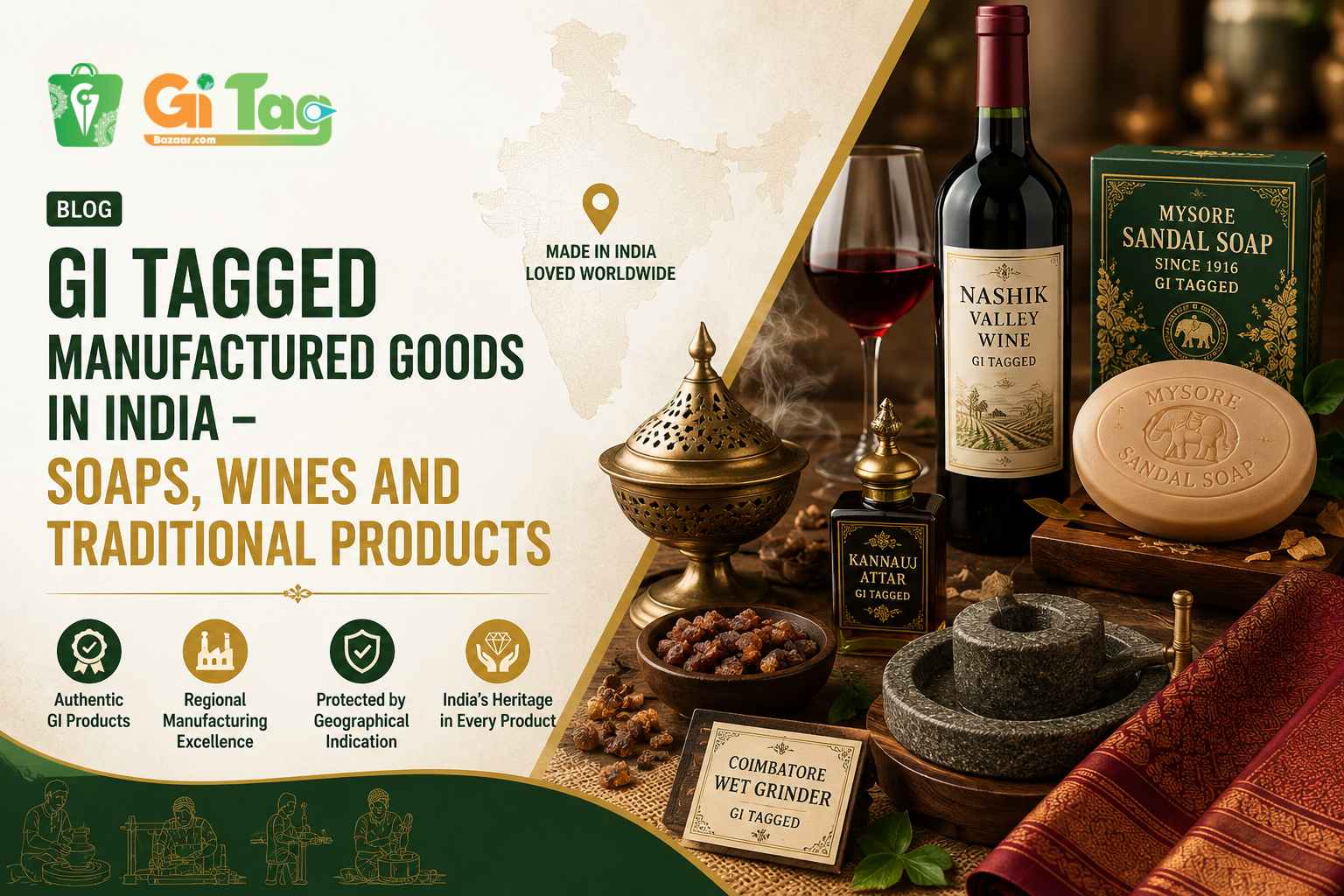
Mysore Sandal Soap and Mysore Agarbathi are the famous GI tagged manufactured goods from Karnataka that mandate the strict use of natural regional ingredients. The government factories maintain the exact heritage formulations originally designed for the royal Wadiyar palace.
The manufactured goods category protects factory items that rely on local origin materials. You can view all GI tagged manufactured goods in India to understand this IP class.
Mysore Sandal Soap Mysore Sandal Soap originates from Mysore. The Karnataka Soaps and Detergents Limited (KSDL) acts as the exclusive manufacturer. The legal GI standard requires the factory to use 100% pure sandalwood oil extracted directly from the local state forests.
Mysore Agarbathi Mysore Agarbathi comes from Mysore. The registry approved this famous incense in 2005. The manufacturers must use natural sandalwood powder and local floral extracts. The artisans handcraft these incense sticks to ensure a slow-burning and pure aromatic experience.
How can Buyers Authenticate and Purchase GI Tagged Products from Karnataka?
Buyers can authenticate and purchase GI tagged products from Karnataka by visiting official Cauvery Handicrafts emporiums, buying directly from KSIC showrooms, and verifying the authorized user certificates on seller platforms. Consumers must always locate the official GI logo on the product packaging.
The market contains many fake versions of premium Karnataka products. You must learn the proper verification steps. We provide a full guide to buy authentic Karnataka GI products online safely.
Follow these verification rules:
- Search for the official Geographical Indication logo on the box.
- Purchase Mysore Silk exclusively through certified KSIC outlets.
- Buy handicrafts directly from the state-run Cauvery Handicrafts portal.
- Demand the authorized user certificate number from online sellers.
- Match the product origin district to the shipping source.
Frequently Asked Questions About GI Tagged Products of Karnataka
Which Karnataka city has the most GI tagged products?
Mysore has the most GI tagged products in Karnataka. The historic royal city holds the origin certifications for famous premium items like Mysore Silk, Mysore Sandal Soap, Mysore Agarbathi, Mysore Rosewood Inlay, and Mysore Traditional Paintings.
Is Mysore Silk available only from KSIC?
Yes. Authentic Mysore Silk is available only from KSIC. The official GI certification grants the Karnataka Silk Industries Corporation the exclusive legal right to manufacture and sell pure mulberry silk sarees under the protected regional name.
Does Karnataka have GI tagged coffee?
Yes. Karnataka has four specific GI tagged coffees. The state holds the origin certifications for Chikmagalur Arabica, Coorg Arabica, Bababudangiris Arabica, and Monsooned Malabar Coffee, which all benefit from the high-altitude shade-grown conditions of the Western Ghats.
What is the Bidar district famous for in GI products?
The Bidar district is famous for the GI tagged Bidriware metal craft. The local artisans have practiced this intricate silver inlay technique on blackened zinc-copper alloy continuously since the historic era of the 14th-century Bahmani Sultanate.
Where can I buy authentic Karnataka GI products online?
Buyers can buy authentic Karnataka GI products online directly from the official Cauvery Handicrafts portal and verified state government platforms. These authorized channels eliminate fake intermediaries and ensure that the traditional artisan communities receive the proper financial compensation.