GI Tag Full Form – Geographical Indication Tag Meaning in India
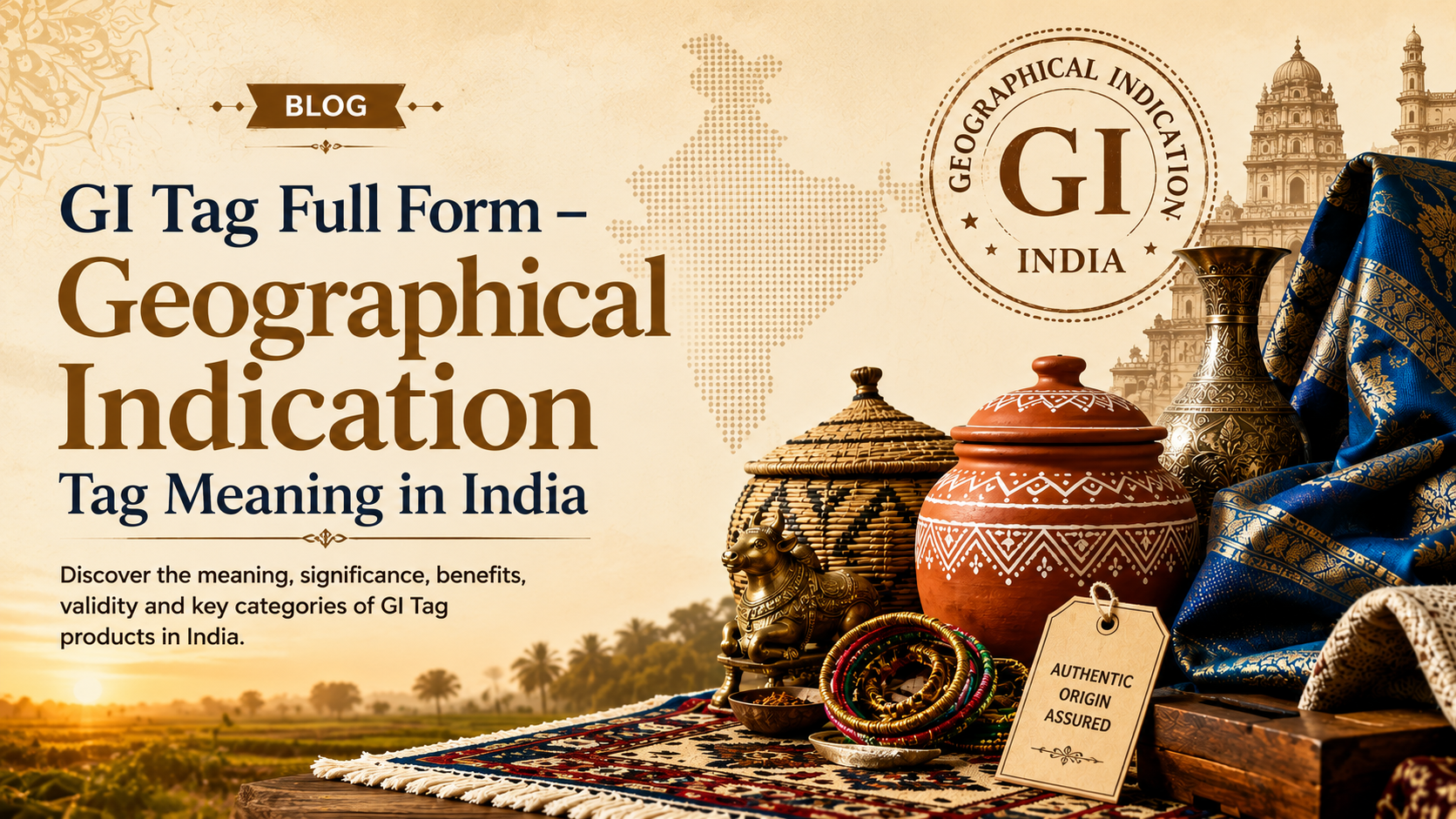
The GI Tag full form is Geographical Indication Tag, which certifies that a product originates from a specific region and possesses unique qualities. This legal sign protects traditional Indian products and guarantees authenticity for buyers in the marketplace.
Table of Contents
- What is the Full Form of GI Tag?
- What is the Meaning of Geographical Indication in India?
- Which is the First GI Tagged Product in India?
- How Long is a Geographical Indication Tag Valid in India?
- What are the Main Categories of GI Products in India?
- Frequently Asked Questions About GI Tag Full Form and Meaning
What is the Full Form of GI Tag?
The full form of GI Tag is Geographical Indication Tag. It is an official sign given to products that come from a specific geographical location and possess unique qualities or a reputation linked to that origin.
The term GI Tag is a widely recognized acronym in India. Consumers, traders, and government officials use this short form in daily business operations. The underlying concept originates from international intellectual property treaties. Specifically, the World Intellectual Property Organization (WIPO) defines Geographical Indications as signs used on products that have a specific geographical origin. WIPO is a specialized agency of the United Nations that helps protect intellectual property globally.
This certification functions as a location-based quality guarantee. Every registered product has a unique registration number and a government certificate. The presence of the tag helps consumers verify the authenticity of premium regional products. It ensures that buyers do not receive cheap imitations of famous regional specialties.
What is the Meaning of Geographical Indication in India?
Geographical Indication in India means a legal status that certifies a product’s regional origin and traditional qualities. It ensures that only authorized producers from that specific region can sell the product using the registered name.
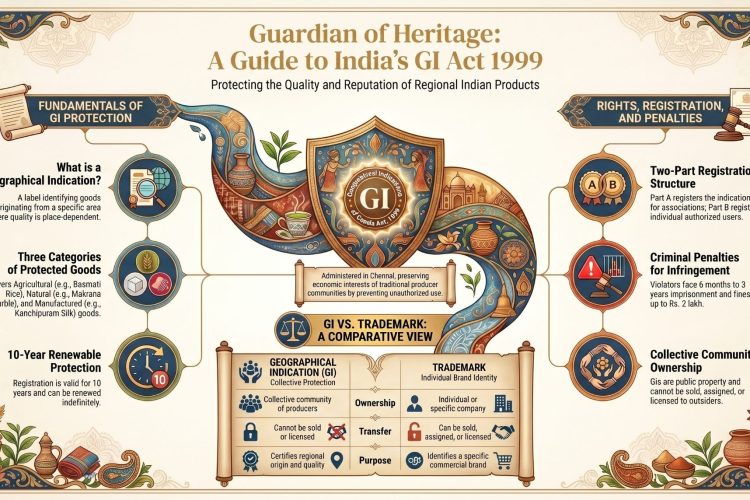
The legal framework for this certification is solid and well-defined. The primary legal foundation is the GI Act 1999, which is officially known as the Geographical Indications of Goods (Registration and Protection) Act, 1999. The Parliament of India passed the GI Act 1999 to secure the rights of local agriculturalists and artisans. This legal framework came into force on 15 September 2003, establishing a formal registration system under the Ministry of Commerce and Industry.
The law protects the collective rights of regional producers. Under the provisions of the GI Act 1999, fake sellers face strict legal penalties if they sell ordinary goods under a registered geographic name. This protection preserves traditional methods and ties the product to its native place of origin.
For example, only registered weavers in Varanasi can sell Banarasi Silk Sarees using the official designation.
Quality control is another major component of the Indian GI system. The registration process requires the applicant group to submit a detailed document explaining the unique qualities of the product. This document specifies the raw materials, production techniques, and geographical influences. The registry office verifies these facts, and this certification provides a clear stamp of quality assurance.
Why does a Place of Origin matter for GI Products?
Place of origin matters for GI products because the local climate, soil, and traditional human skills create unique product characteristics. These geographical factors cannot be reproduced in any other region or environment.
The place of origin determines the chemical composition, taste, and physical properties of agricultural products. Natural factors such as temperature variations, rainfall patterns, altitude, and soil minerals shape the growth of crops. For example, the specific acidic soil and misty climate of West Bengal give Darjeeling Tea its famous muscatel flavor. Farmers cannot grow the exact same tea in other states because the soil properties and atmospheric conditions are different.
Traditional human skills represent another critical element of the place of origin. Local communities develop specific methods for handloom weaving, metal crafting, or food preparation over many generations. These heritage skills pass from parents to children in a particular geographic territory.
A GI Tag protects this combined natural and human legacy, which guarantees the authenticity of handmade items.
What is the difference between a GI Tag and a Trademark?
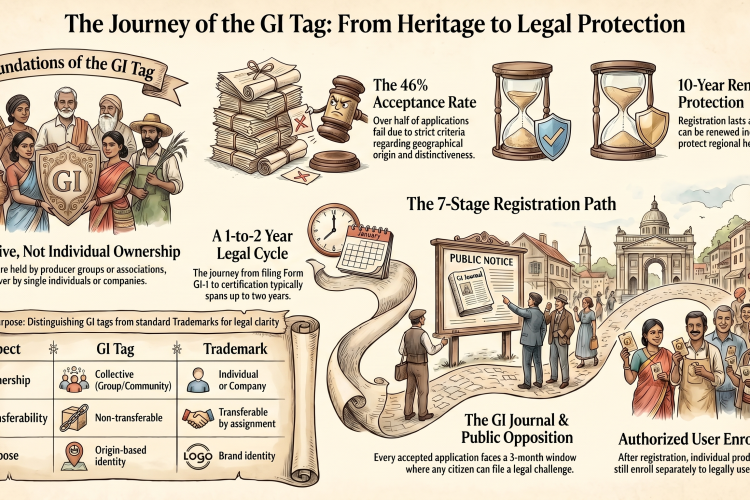
A GI tag protects a collective regional origin, whereas a trademark protects an individual business brand. A GI tag belongs to all authorized producers in a specific region, while a trademark belongs to a single commercial entity.
Distinct forms of intellectual property exist in India to serve different business purposes. A trademark represents a private right that belongs to a single company, business owner, or individual. It protects a specific brand name, design, or logo from being used by competitors. For example, a business can register a private trademark to sell spices under a unique corporate name.
A Geographical Indication represents a collective right for regional communities. It is a public right that does not belong to a single commercial trader or manufacturer. Instead, the tag belongs to all producers who live and work within the designated geographical region. Any local farmer or artisan who meets the quality standards can register as an authorized user of the tag.
Furthermore, a trademark can be newly created by any business at any time. In contrast, a Geographical Indication must have a historical link to a specific region. The product must possess pre-existing qualities, a reputation, or characteristics that are naturally attributable to its origin.
Which is the First GI Tagged Product in India?
The first GI tagged product in India is Darjeeling Tea. It received the Geographical Indication tag in the year 2004, which recognized the unique flavor and quality of tea leaves grown in Darjeeling, West Bengal.
Darjeeling Tea received the first official GI registration in India under application number 1. The Geographical Indications Registry issued this historic certificate in October 2004, marking the official start of regional product protection in the country. This registration protected the interests of thousands of local plantation workers and estate owners.
The unique characteristics of Darjeeling tea leaves are famous worldwide. The tea grows at high altitudes on steep mountain slopes, receiving heavy rainfall and constant mist. These natural factors create a highly delicate tea with a distinct muscatel flavor, which global experts often call the “Champagne of Teas.”
This landmark registration set a major precedent for other traditional Indian goods. It proved that legal certification can protect regional farmers from global competition and copycat sellers. The success of this first registration encouraged agricultural and handicraft associations across India to apply for their own GI tags.
How Long is a Geographical Indication Tag Valid in India?
A Geographical Indication tag is valid for 10 years in India. The registered proprietors or authorized users must renew the tag after every 10 years by submitting a renewal application to the GI Registry.
The initial registration period under the GI Act 1999 is ten years. The validity starts from the official date of the initial application filing. To maintain the legal protection after this ten-year period, authorized users must submit a formal renewal application along with the prescribed renewal fees.
The renewal documents must be filed with the official GI Registry before the ten-year period finishes. The national registry office is headquartered in Chennai, Tamil Nadu. If the authorized users do not file the renewal in time, the registry removes the product name from the register. The law does provide a grace period to complete late renewals with an additional fee.
Unlike patents or copyrights, which expire permanently after a fixed number of years, a GI Tag is renewable indefinitely. We can renew the tag every 10 years forever. This infinite renewal rule exists because a Geographical Indication protects traditional heritage and geographic characteristics that do not change over time.
What are the Main Categories of GI Products in India?
The main categories of GI products in India are agriculture, handicrafts, textiles, foodstuffs, and manufactured goods. These categories represent the diverse traditional crafts, farming products, and regional foods of different Indian states.
The Chennai registry office categorizes every registered product into five major divisions. This system helps the government manage quality control and simplify the legal registration process. These categories represent a diverse range of traditional products in India.
1. Agriculture Products: This category includes fresh crops, fruits, grains, and beverages that owe their taste, color, and nutritional profile to local soil and weather. Famous examples include Darjeeling Tea, Kashmir Saffron, Coorg Orange, and Ratnagiri Alphonso Mango. We link these products to our dedicated agriculture GI products category page.
2. Handicraft Products: Handicrafts represent traditional art forms, paintings, and metalworks created by skilled regional artisans. Famous examples include Bidriware from Karnataka, Jaipur Blue Pottery, and Madhubani Paintings from Bihar. These products protect heritage crafts from factory-made plastics.
3. Textile Products: Textiles include handloom sarees, silks, shawls, and traditional weaves that require manual looming techniques. Famous examples include Kanchipuram Silk Sarees, Mysore Silk, Lucknow Chikankari, and Pochampally Ikat. These weaves represent the ultimate heritage crafts of Indian handloom communities.
4. Foodstuff Products: Foodstuffs cover prepared sweets, traditional snacks, and spices that use specific local recipes and ingredients. Famous examples include Tirupati Laddu, Dharwad Pedha, Bikaneri Bhujia, and Hyderabadi Haleem.
5. Manufactured Goods: This category includes industrial or chemical products that originate from a specific place and use traditional manufacturing processes. Examples include Mysore Sandal Soap, Mysore Agarbathi, and Kannauj Perfume.
We maintain a comprehensive directory of all these registered items. You can view the full list by reading our guide to the complete list of GI tagged products in India.
Frequently Asked Questions About GI Tag Full Form and Meaning
Who issues the GI Tag in India?
The Controller General of Patents, Designs and Trade Marks issues the GI Tag in India. This office operates the Geographical Indications Registry, which is located in Chennai, Tamil Nadu, under the Ministry of Commerce and Industry.
The office of the Controller General is the national authority for all intellectual property rights in India. This office verifies the historical documents, botanical records, and production methods before granting a GI Tag. The registry operates as the official GI Registry, ensuring that only genuine traditional products receive the official tag.
Where is the GI Registry office located in India?
The Geographical Indications Registry office in India is located in Chennai, Tamil Nadu. This central office processes all GI tag applications, maintains the official register, and issues registration certificates.
The registry office is located in Chennai. It functions as the national center for all activities related to Geographical Indications in India. Artisans, farmers, and regional associations must submit their application documents to this office. The Chennai registry maintains the physical and digital database of all registered products and authorized users.
How many GI tags are registered in India?
There are more than 500 registered GI tags in India as of 2026. The list includes famous regional specialties such as Kashmir Saffron, Mysore Silk, Alphonso Mango, and Nagpur Orange.
The total number of registered GI tags grows every year as more artisan guilds and farmer associations apply for legal protection. From a single product in 2004, the registry has grown to protect over 500 unique regional items as of 2026. This growing number shows the active efforts of the government to preserve Indian cultural heritage and agricultural diversity. It also helps consumers find verified authentic goods.
Can an individual own a Geographical Indication tag?
No. An individual cannot own a Geographical Indication tag in India. The tag is a collective right that belongs to a community of producers, and individuals can only register as authorized users of the tag.
The law explicitly states that a Geographical Indication is a public, community-owned asset. An association of producers, a cooperative society, or a government organization must file the initial application. Once registered, any individual producer who operates in that specific geographical region and maintains the prescribed quality standards can apply to become an “authorized user.” This collective ownership protects small artisans from being monopolized by large corporations.