Often called the “King of Mangoes,” the Alphonso is more than just a fruit—it is a global obsession. Grown in the unique laterite soils of Maharashtra’s coastal Konkan belt, these GI-tagged mangoes are famous for their intoxicating aroma that can fill an entire room. With a vibrant saffron-colored pulp that is completely fiberless and a texture as smooth as premium butter, the Alphonso offers a sensory experience that no other mango variety in the world can replicate.
Why this is different
Official GI Tag Authentication: Certified under GI No. 139, ensuring your mangoes are grown exclusively in the five authorized districts: Ratnagiri, Sindhudurg, Raigad, Thane, and Palghar.
The Laterite Advantage: The iron-rich red soil of the Konkan region gives the Hapus its signature mineral-rich sweetness and intense aromatic complexity.
Royal Heritage: A 500-year-old legacy introduced by Portuguese explorers, perfected over centuries by the local farming communities of Western India.
Zero Fiber: Unlike common varieties, the Alphonso is prized for its “melt-in-the-mouth” consistency, making it the gold standard for desserts and gourmet dining.
Benefits
A Masterclass in Flavor
The Alphonso is characterized by a perfect balance of sweetness and a hint of citrusy tartness. Its high sugar-to-acid ratio creates a deep, lingering honeyed finish that stays on the palate long after the first bite.
The Essence of the Konkan
By choosing GI-tagged Alphonso mangoes, you are:
Supporting 1.25 Lakh Farmers: Providing direct livelihoods to the traditional orchard owners of the Konkan coast.
Promoting Sustainable Orchards: Many Konkan farmers use natural ripening methods like grass-hay (Aadi) storage rather than harmful chemicals.
Preserving a Culinary Legend: Ensuring the survival of the original grafting techniques introduced in the 16th century.
Feature Specs: Identifying Perfection
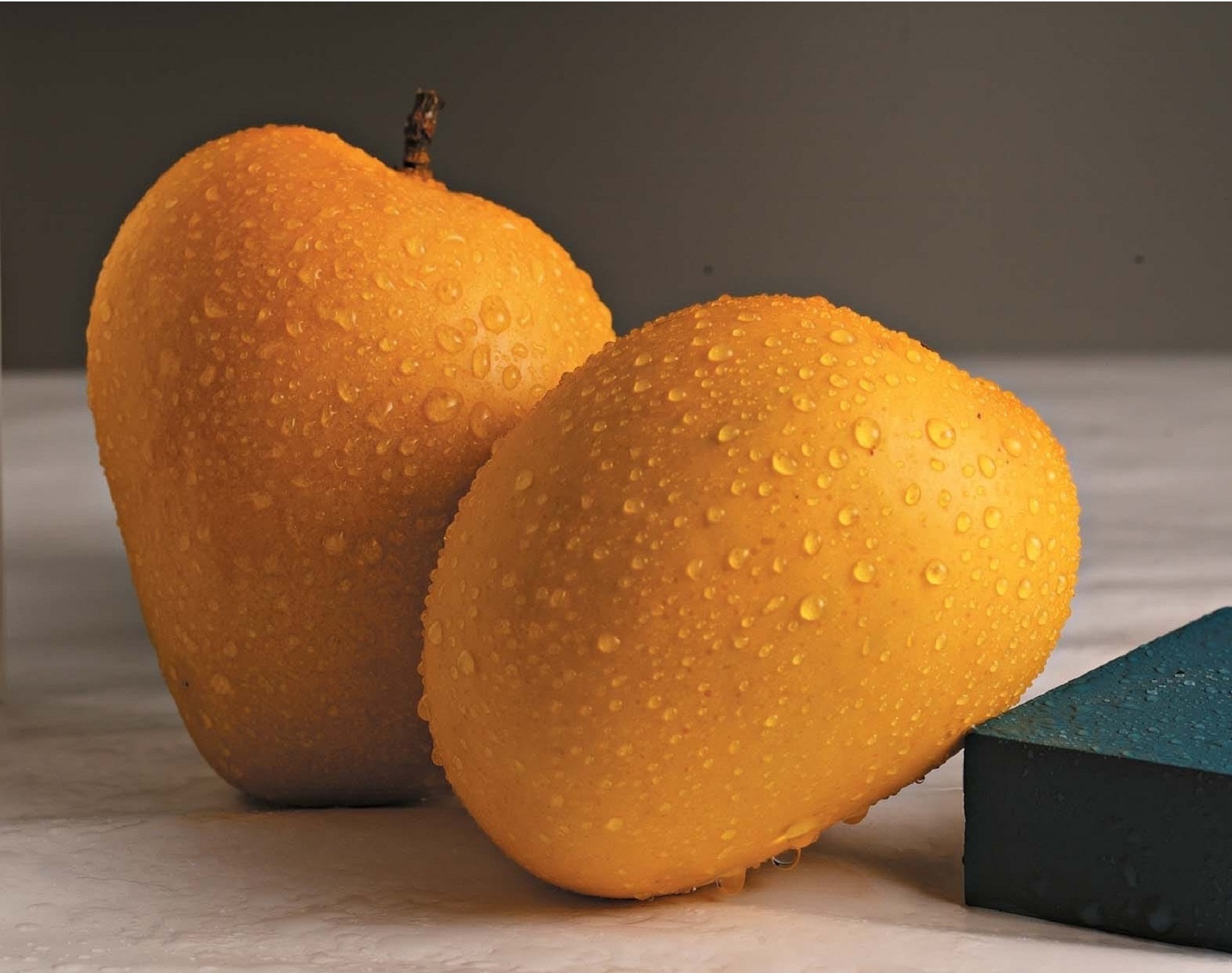
The Appearance: Medium-sized and oval with a smooth, golden-yellow skin. As it matures, it often develops a beautiful reddish-orange blush at the top.
The Texture: Firm yet yielding when ripe. Once sliced, the flesh is a deep, uniform orange with absolutely no stringy fibers.
The Scent: An intense, fruity, and floral fragrance that is detectable even through the skin of the fruit.
The best way to enjoy an Alphonso is to eat it fresh. Chill the mango for an hour, slice it away from the stone, and scoop the buttery pulp with a spoon.
The Gourmet Ingredient
The lack of fiber makes it the ultimate base for Aamras, high-end sorbets, cheesecakes, and the world-famous Alphonso Lassi.
The Diplomatic Gift
Traditionally gifted in dozens (petis), the Alphonso is considered a symbol of luxury and high regard, making it the perfect seasonal gift for family and business associates.
Identifying Real vs. Fake (Buyer Safety)
Protect yourself from “Fake Hapus” with these tips:
The Sniff Test: A real Alphonso smells like paradise. If it has no scent or smells slightly of chemicals/kerosene, it is likely an imitation or chemically ripened.
The Color Gradient: Naturally ripened Hapus will have shades of green and yellow (uneven ripening). A perfectly uniform, bright yellow mango often indicates chemical treatment.
The Water Test: Gently place a mango in a bowl of water. Naturally ripened mangoes usually sink; those treated with calcium carbide often float.
The Skin Texture: Authentic Hapus skin is smooth but thin. If the skin feels unnaturally thick or waxy, it might be a different variety disguised as an Alphonso.
FAQ
What is the difference between Ratnagiri and Devgad Alphonso? While they share the same GI tag now, Devgad mangoes are often slightly smaller with thinner skin, while Ratnagiri mangoes are known for their slightly larger size and intense aroma. Both are premium GI products.
Why are they so expensive? The Alphonso has a very short season (March–June) and is highly labor-intensive to grow and harvest. Its global demand far exceeds its limited supply from the Konkan region.
How should I ripen them at home? If you receive slightly green mangoes, keep them in a box of hay or wrap them in newspaper in a warm, dry corner. Do not refrigerate until they are fully ripe!
Are these export-quality? Yes, our GI-tagged mangoes meet the stringent phytosanitary standards required for markets in the UK, USA, and UAE.
Quality Guarantee
We source our “Hapus” directly from certified farmer cooperatives in Ratnagiri and Devgad. Each box is hand-packed to ensure the delicate fruit arrives in pristine condition, ready to be the center of your table.